Why Animals Dominate Emblems
Following the austerity of World War II, the automotive industry entered an era of unbridled exuberance. Engines grew larger, bodies became wider, and the subtle typography of the past was replaced by aggressive, dynamic symbolism. Chief among these symbols was the animal kingdom.
The Prancing Horse and the Raging Bull
Enzo Ferrari chose the Cavallino Rampante (prancing horse) as an homage to Count Francesco Baracca, a legendary Italian World War I ace who painted the horse on his fighter plane. Set against a canary yellow background (the color of Modena), it became the ultimate symbol of motorsport dominance.
Conversely, Ferruccio Lamborghini, a Taurus by zodiac sign and a lover of bullfighting, chose the raging bull. It was a deliberate, aggressive counter-statement to Ferrari's horse—heavier, grounded, and furiously powerful.
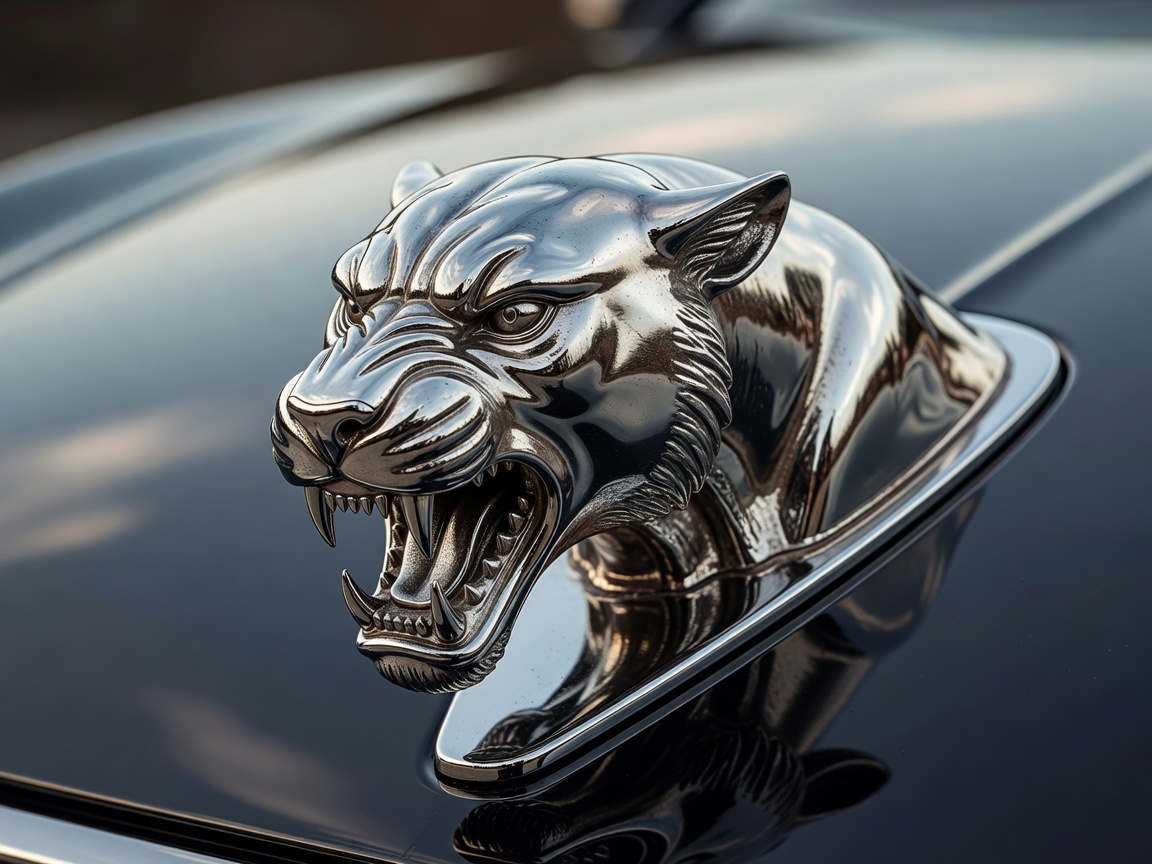
Predators of the Road
British manufacturer Jaguar utilized the 'Leaper', a sleek, forward-lunging feline that perfectly encapsulated the brand's core values: grace, space, and pace. Originally offered as an optional hood ornament in 1938, it became inextricably linked to the marque's identity during the 1950s.
Peugeot's Lion Evolution
While originating in the 19th century, the 1960s saw the Peugeot lion transition from a heraldic walking lion to the heraldic 'lion rampant' (rearing on hind legs), a more aggressive stance for a competitive era.
Ford Mustang
The running pony, designed by Phil Clark, is unique in that it runs counter-clockwise (left to right). It symbolized the westward expansion and the free-spirited nature of the 1960s American youth.
"An animal emblem bypasses rational thought. It communicates speed, aggression, and status on a primal level before a single word of copy is read."
This era cemented the idea that a car was not just a tool for transport, but an avatar of the driver's personality, fiercely represented by the beast on the grille.
Enter Modern Minimalism